Guide · 6 min read ·
How to Choose the Right Chandelier Size for Your Room
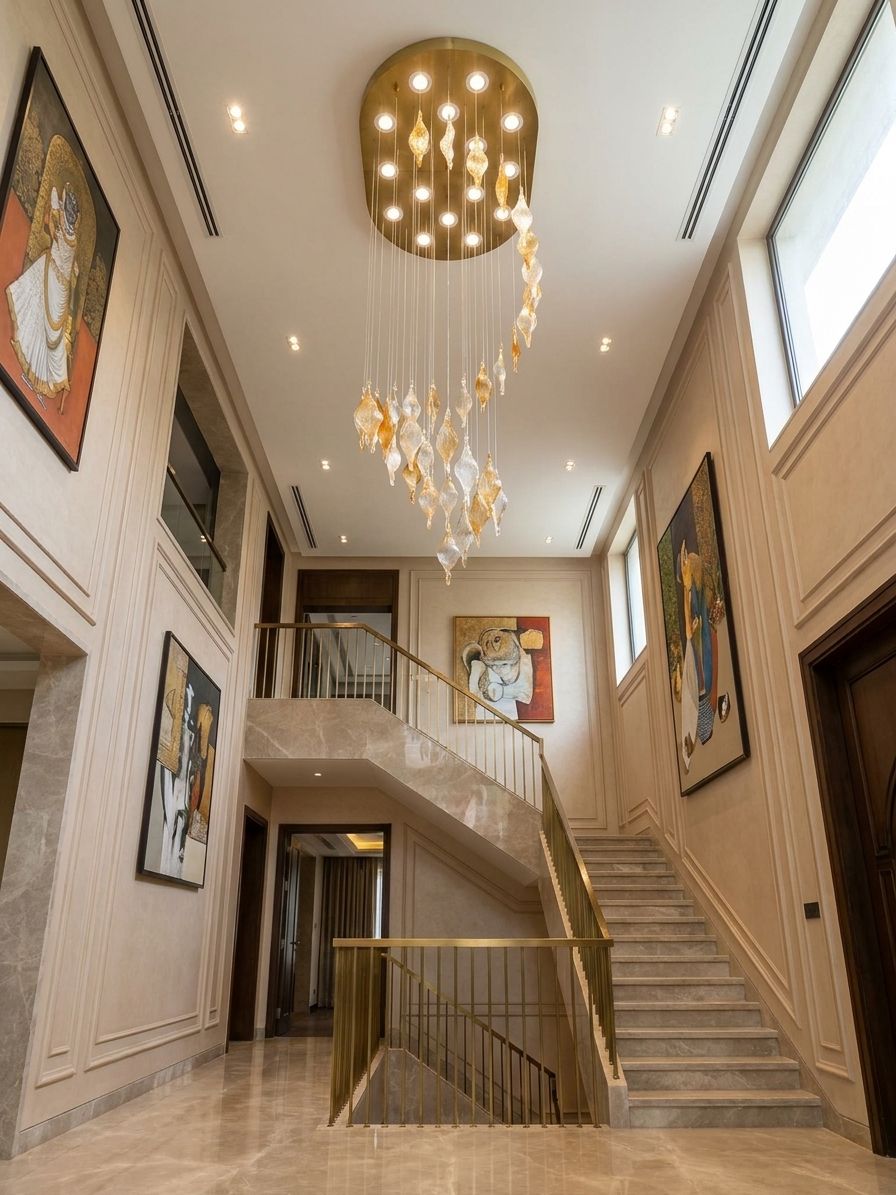
A chandelier is the one fixture a room is built around. Get the size right and it feels inevitable — as though the space was designed for it. Get it wrong and even the most beautiful piece looks marooned: too small and it floats like an afterthought, too large and it crowds the room. The good news is that sizing a chandelier comes down to a few simple rules. Here is how to get it right.
The diameter formula
Start with the footprint of the room. Measure the length and width in feet, add them together, and treat that sum as the ideal chandelier diameter in inches. A 12ft × 14ft room (12 + 14 = 26) suits a fixture around 26 inches across. A generous 16ft × 18ft living room calls for something closer to 34 inches.
Room length (ft) + room width (ft) = ideal chandelier diameter (inches).
Treat this as a centre point rather than a hard limit. A bold, sculptural piece can run a little larger to make a statement; a delicate design can sit slightly smaller. What matters is that the fixture reads as proportionate to the room it anchors.
How high to hang it
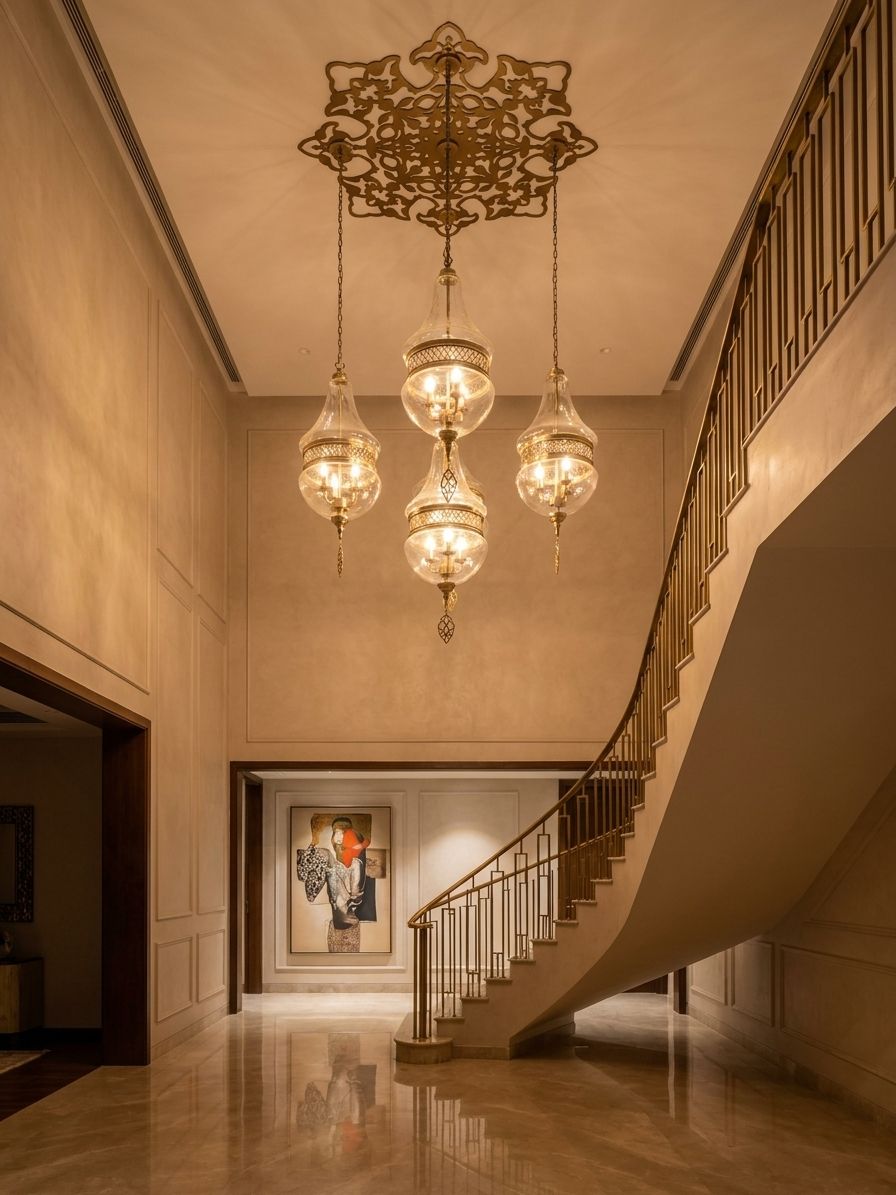
Height is where most people go wrong. In a room with a standard 8-foot ceiling, the bottom of the chandelier should sit at least 7 feet above the floor so no one walks into it. For every additional foot of ceiling height, lower the fixture by roughly 3 inches — this keeps a tall room from swallowing the piece.
Over a dining table the rule is different, because nobody walks beneath it: hang the chandelier so its lowest point is 30 to 36 inches above the tabletop. That places it at eye level when seated and keeps it from blocking the sightline across the table.
Over a dining table
For a fixture centred over a dining table, scale to the table, not the room. The chandelier should be roughly half to two-thirds the width of the table. A 40-inch-wide table pairs well with a 20-to-26-inch fixture. For long rectangular tables, consider a linear chandelier or a row of two to three pendants rather than a single round piece.
Dining rule of thumb: chandelier width = ½ to ⅔ of the table width, hung 30–36 inches above the top.
Foyers, stairwells and double-height spaces
Entryways and stairwells reward height over width. In a two-storey foyer, a tall cascading or tiered design fills the vertical volume in a way a single round fixture never could. Keep the bottom of the piece at least 7 feet above the floor at its lowest walking point, and centre it in the window if the foyer is visible from the street — it becomes the view from outside as well as in.
Living rooms and bedrooms
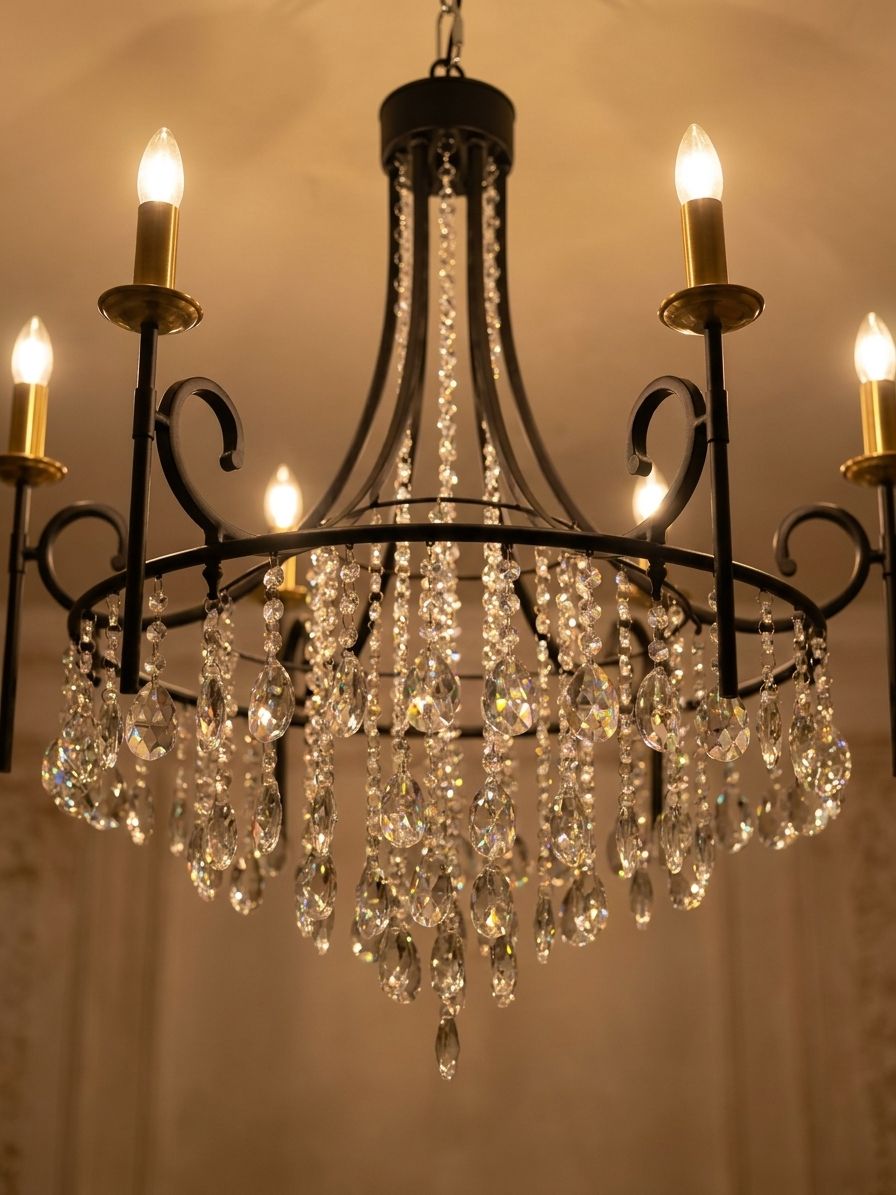
In a living room, the diameter formula is your guide, but also consider where seating sits — a chandelier centred over a coffee table or seating group grounds the arrangement. In bedrooms, a chandelier can hang centred in the room or over the foot of the bed; keep it more modest in scale so it reads as soft and atmospheric rather than imposing.
Width, drop and proportion
Diameter is only half the equation. A piece that is the right width but the wrong height can still feel off. As a starting point, a chandelier's height in inches can be roughly 2.5 to 3 times the ceiling height in feet — so a 10-foot ceiling suits a fixture around 25 to 30 inches tall. Cascading designs naturally run taller; compact drum and shade forms run shorter.
When in doubt, make it to measure
These rules cover the vast majority of rooms, but every space has its quirks — a sloped ceiling, an oversized island, a stairwell with an awkward turn. Because every Delhi Brass piece is made to order, the diameter, drop, number of arms and chain length can all be tuned to your exact ceiling height and room. If you are unsure, send us your measurements and a photo of the space and we will recommend a size.
Quick recap — Diameter: room L + W in feet, read as inches. Height: 7ft clearance minimum, −3 inches per extra foot of ceiling. Dining: ½–⅔ of table width, 30–36 inches above the top.
Every Delhi Brass piece is made to order and fully customisable.
Explore the Collection